Is used similarly to duplicate output file descriptors. If n is not specified, the standard output is used. If the digits in word do not specify a file descriptor open for output, a redirection error occurs.

As a special case, if n is omitted, and word does not expand to one or more digits, the standard output and standard error are redirected as described previously. Likewise, the simplest method a program can use to display its output is to write it in the standard output. In a standard shell session, the keyboard is defined as the stdin and the monitor screen is defined as the stdout and stderr. However, we can redirect the input and output by changing the default direction of the file descriptor.

For example, if we point 1 to a file, the standard output will be output to the file. In this chapter, we will discuss in detail about the Shell input/output redirections. Most Unix system commands take input from your terminal and send the resulting output back to your terminal. A command normally reads its input from the standard input, which happens to be your terminal by default. Similarly, a command normally writes its output to standard output, which is again your terminal by default. If word expands to one or more digits, the file descriptor denoted by n is made to be a copy of that file descriptor.

If the digits in word do not specify a file descriptor open for input, a redirection error occurs. If word evaluates to '-', file descriptor n is closed. If n is not specified, the standard input is used. Redirecting stdout suppresses process output from appearing on the terminal. As seen in the following table, redirecting only stdout does not suppress stderr error messages from displaying on the terminal. If the file does not exist, it will be created.

If the file does exist and the redirection is not one that appends to the file, the file's contents will be overwritten. If you want to discard messages, the special file /dev/null quietly discards channel output redirected to it and is always an empty file. Redirection of input and output is a natural function of any programming or scripting language. Technically, it happens inherently whenever you interact with a computer. Input gets read from stdin , output goes to stdout , and errors get sent to stderr. Understanding that these data streams exist enables you to control where information goes when you're using a shell, such as Bash or Zsh.

This command uses redirection binding, which uses & to bind two outputs together. The function of this command is that the error output will use the same file descriptor as the standard output. In other words, the error output will be sent to the same place as the standard output. A process uses numbered channels called file descriptors to get input and send output. All processes start with at least three file descriptors. Standard output sends normal output to the terminal.

Standard error sends error messages to the terminal. If a program opens separate connections to other files, it may use higher-numbered file descriptors. The |& redirection operator sends both stdout and stderr of command1 over a pipe to stdin of command2. File descriptors always point to some file (unless they're closed). Usually when bash starts all three file descriptors, stdin, stdout, and stderr, point to your terminal.

The input is read from what you type in the terminal and both outputs are sent to the terminal. This is a special file known as a character device file. This allows the file to act like a device that is unbuffered and can accept streams of data. When you access a device file, you are communicating with a driver. In the case of /dev/null, it acts as a pseudo device with a driver that has a very specific purpose. It discards anything you write to it, and only returns a EOF character when read.

Sending an EOF more or less means making the process aware that no additional input will be sent . However, the next sequence does redirection in the opposite order. This redirects standard error to the default place for standard output and then redirects only standard output to file. I/O redirection changes how the process gets its input or output. Instead of getting input from the keyboard, or sending output and errors to the terminal, the process reads from or writes to files. Redirection lets you save messages to a file that are normally sent to the terminal window.

Alternatively, you can use redirection to discard output or errors, so they are not displayed on the terminal or saved. Even if we redirect the stdout to a file, we still see the error output in the screen, because we are redirecting just the standard output, not the standard error. To hide the standard error or standard output messages produced by a program, redirect them to /dev/null, a special file that swallows all data written to it. Reads from a null special file always return 0 bytes. The null device is typically used for disposing of unwanted output streams of a process, or as a convenient empty file for input streams. The /dev/null device is a special file, not a directory, so one cannot move a whole file or directory into it with the Unix mv command.

If it expands to more than one word, Bash reports an error. Understanding input and output redirection in bash shell scripts to avoid printing output and errors. Understanding file descriptors is key to handle commands output and errors. Data is entered into the computer via stdin , and the resulting output goes to stdout .

This functionality is referred to as redirection. This is because with this method, standard output and error output will preempt the pipeline to the out file, which may lead to missing and covering of the output content. Sometimes there may be only error information or normal information. In any case, it is impossible to predict the final situation in this way.

The /dev/null device is a special file that discards all data written to it but reports that the write operation succeeded. It is typically used for disposing of unwanted output streams of a process. Since there are two types of output, standard output and standard error, the first use case is to filter out one type or the other. It's easier to understand through a practical example.

Let's say you're looking for a string in "/sys" to find files that refer to power settings. /dev/fd/fd If fd is a valid integer, file descriptor fd is duplicated. /dev/tcp/host/port If host is a valid hostname or Internet address, and port is an integer port number, Bash attempts to open a TCP connection to the corresponding socket. /dev/udp/host/port If host is a valid hostname or Internet address, and port is an integer port number, Bash attempts to open a UDP connection to the corresponding socket.

A failure to open or create a file causes the redirection to fail. Directs only the standard output to file dirlist, because the standard error was duplicated as standard output before the standard output was redirected to dirlist. The next few commands generate error messages because some system directories are inaccessible to normal users. Redirect errors to a file while viewing normal command output on the terminal. Redirects stderr and stdout to /dev/null… which means to nowhere.

Things sent to /dev/null are not saved, cached, or remembered in any way. They are just sent to ' nowhere ' and forgotten. This is a way of running programs and making sure they produce NO output and will never be seen on the command line or in a log file. In the above command, we redirect the original standard output to the out file, so the console is left with an error prompt. In addition, when the append operation is performed, the contents of the out file are not cleared, but an additional a.txt is added.
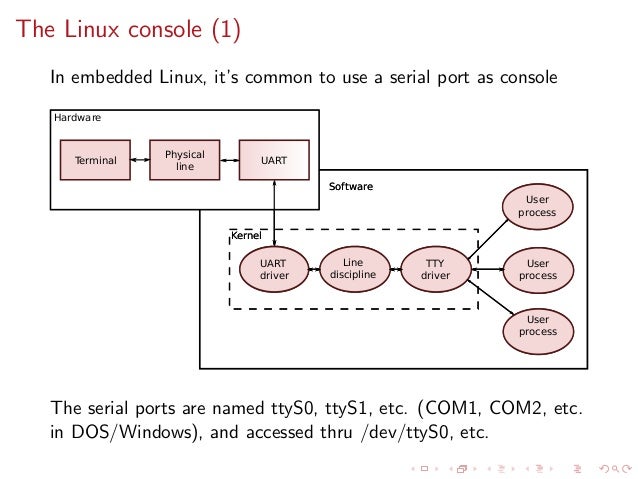
If in some cases, we need to store the execution results of shell commands in a file, then we need to use the redirection function of input and output. Just like the program we usually write, a program will process the external input, and then output the result to the specified location. In an interactive program, input comes from the user's keyboard and mouse, and the results are output to the user's screen, and even to the playback device. For some programs running in the background, the input may come from some external files, and the operation results are usually written to other files. Following example, redirects standard error to point at what standard output currently points at, then redirects stdout to /dev/null.
Subprocess.STDOUT¶Special value that can be used as the stderr argument to Popen and indicates that standard error should go into the same handle as standard output. Shell scripts allow us to program commands in chains and have the system execute them as a scripted event, just like batch files. They also allow for far more useful functions, such as command substitution. You can invoke a command, like date, and use it's output as part of a file-naming scheme. /dev/null is a special type file known as a character device file. This means that the file acts like a device that is unbuffered and can accept streams of data.
However, the write operation will return successful. In shell 1 we use the mkfifo command to create a named pipe called fifo. A named pipe is similar to a regular pipe, except that it's accessed as part of the file system. It can be opened by multiple processes for reading or writing.

When processes are exchanging data via the FIFO, the kernel passes all data internally without writing it to the file system. So what happens here is the commands command1 and command2 get executed in the sub-shell, and bash redirects their output to file. Here bash tries to open the file for reading before running any commands. If opening the file fails, bash quits with error and doesn't run the command. If opening the file succeeds, bash uses the file descriptor of the opened file as the stdin file descriptor for the command. To be a pro at bash redirections all you need to do is visualize how the file descriptors get changed when redirections happen.

The pipe takes the output of the first command and makes it the input of the second command. You might want to see a list of all directories and files in the /etc directory. You know that's going to be a long list and that most of the output will scroll off the top of the screen. The less command will break the output into pages, and you can then scroll upward or downward through the pages to display the results.

The syntax is to issue the ls command to list the contents of /etc, and then use pipe to send that list into less so that it can be broken into pages. The output redirector is probably the most recognized of the operators. The standard output is usually to the terminal window.

For example, when you type the date command, the resulting time and date output is displayed on the screen. Hi there, I need to execute a command in the bash. The program prints some standard error and then wants the user to choose one of several options and type the according input. I am trying to solve this issue in a bash script but also running into some circular dependency.

If you tend to forget the file descriptor of stdout and stderr, the following command will do just fine. It's a more generalized format of the previous command. Both stdout and stderr will be redirected to /dev/null. To get standard errors only, we need to redirect stdout to the "/dev/null" file. Standard output is going to nul and standard error output is being sent to standard output so both error and normal output go to the same place.

In Windows, nul is a null device, which means the output is just flushed and you don't see it. The way to discard commands output and error messages is to redirect them to the null device. A running program, or process, needs to read input from somewhere and write output to somewhere. A command run from the shell prompt normally reads its input from the keyboard and sends its output to its terminal window. If any other file were given instead of /dev/null, the standard output would have been written to that file.

Similarly, to redirect only the STDERR to /dev/null, use the integer '2' instead of '1'. The universal_newlines argument is equivalent to text and is provided for backwards compatibility. By default, file objects are opened in binary mode. If check is true, and the process exits with a non-zero exit code, aCalledProcessError exception will be raised.

Attributes of that exception hold the arguments, the exit code, and stdout and stderr if they were captured. /dev/null is a pseudo-device file in Linux, which is used to discard output coming from programs, especially the ones executed on the command line. This file behaves like a sink, i.e. a target file which can be written, however as soon as any stream of data is written to this file, it is immediately deleted. The echo command is used to send output to stdout. This is usually your terminal but can be redirected to other things.
Browse other questions tagged command-line bash redirect stdout or ask your own question. For starter, the following example will redirect the stdout of the echo command to a text file. If not specified, bash will use stdout by default.

Causes the file whose name is the expansion of word to be opened for both reading and writing on file descriptor n, or on file descriptor 0 if n is not specified. The output from a command normally intended for standard output can be easily diverted to a file instead. This capability is known as output redirection. We can hide the regular output, but still show errors, by redirecting stdout to the special "/dev/null" device. "/dev/null" simply reads anything passed to it, and discards them.

The program must handle such file descriptors correctly, otherwise it could attempt an invalid read or write operation and crash. The Bash shell has the ability to reassign the communication channels when loading a program. It allows, for example, to override the screen as the standard output and use a file in the local filesystem as stdout. Stdout file descriptor isn't present so it defaults to 1, any error would be echoed to the screen.


No comments:
Post a Comment
Note: Only a member of this blog may post a comment.